



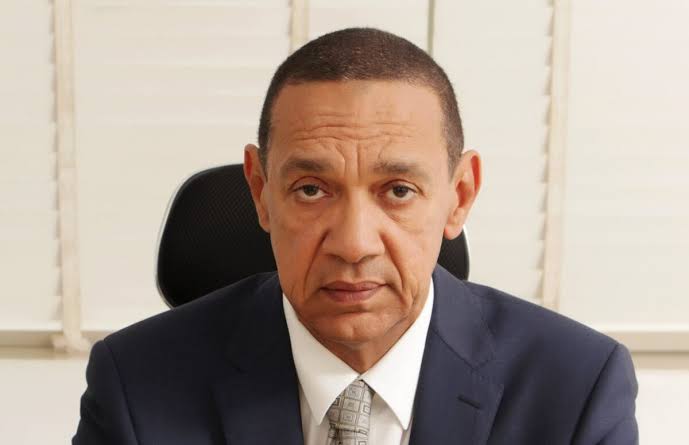
Former Bayelsa East Senator, Ben Murray-Bruce, has faulted Nigeria’s 2013 electricity privatisation, describing it as a failure and urging President Bola Tinubu to decentralise the country’s power generation and distribution system.
Murray-Bruce made the call in an open letter to the President shared on Saturday and titled, “Start the Dance on Electricity. The Privatisation Failed. The Owners Are Billing Darkness.”
Bruce is a former senator and media entrepreneur, who dumped the opposition Peoples Democratic Party (PDP) in 2025 for the ruling All Progressives Congress (APC), citing his conviction of the President Bola Tinubu’s reform-driven administration.
Nigeria privatised its electricity in 2013 under the PDP led by former President Goodluck Jonathan.
He said data published by the Nigerian Electricity Regulatory Commission in April showed that only 4,286 megawatts of Nigeria’s 13,625MW installed generation capacity was available for dispatch.
According to him, 10 of the country’s 28 power plants accounted for 81 per cent of total electricity generated, while the national grid reportedly dropped from more than 4,000MW to 1,132MW at about 8:30pm on August 22.
He said 12 generating stations were producing no electricity at the time, including Egbin, Geregu, Kainji, Shiroro and Zungeru.
“That is not an industry, Your Excellency. That is a rumour of an industry,” Murray-Bruce wrote.
He argued that the 2013 privatisation was not a genuine reform but a transfer of public assets to private operators without sufficient financial capacity to revive and expand them.
“The men and women who bought the GenCos and the DisCos had enough money to purchase the assets. They did not have enough money to run them. Owning a power station and capitalising a power station are two different economic acts, and we confused them.
“So let me say the thing everybody in Abuja knows and nobody will put in writing: by the standard of what this industry actually requires, the people who bought Nigeria’s electricity assets are poor. Not poor as men, but poor as utilities. A serious distribution company in a country of 240 million people needs a balance sheet measured in billions of dollars, not billions of naira. They do not have it. They never had it. They were never going to have it,” the former Senator said.
The former senator said the electricity sector had continued to depend heavily on public funds, noting that generating companies claimed they were owed more than N7tn, while the Federal Government had approved a N4tn bond programme to address liabilities in the sector.
He also criticised electricity distribution companies over metering, saying 5.1 million of Nigeria’s 12.31 million active electricity customers remained unmetered as of February 2026.
Murray-Bruce cited Yola, Jos, Kano and Kaduna DisCos as having particularly low metering rates, while Ibadan DisCo had nearly half of its 2.48 million customers without meters.
Despite the metering gap, he said the DisCos collected N801.16bn between January and April.
He described estimated billing as unfair to consumers and accused the distribution companies of “billing darkness”.
While acknowledging that generating companies were owed money, Murray-Bruce said they could not continue to depend on government bailouts and tariff increases without making corresponding investments.
He urged the Tinubu administration to abandon the approach of relying on a centralised electricity system and instead establish smaller, community-based power systems.
“Every village, every estate, every community in Nigeria should have its own PHCN,” he said, arguing that decentralised electricity systems could provide a more sustainable alternative to relying on a single national grid.
All rights reserved. This material, and other digital content on this website, may not be reproduced, published, broadcast, rewritten or redistributed in whole or in part without prior express written permission from Third Lens.
Contact: theeditor@thirdlensng.com