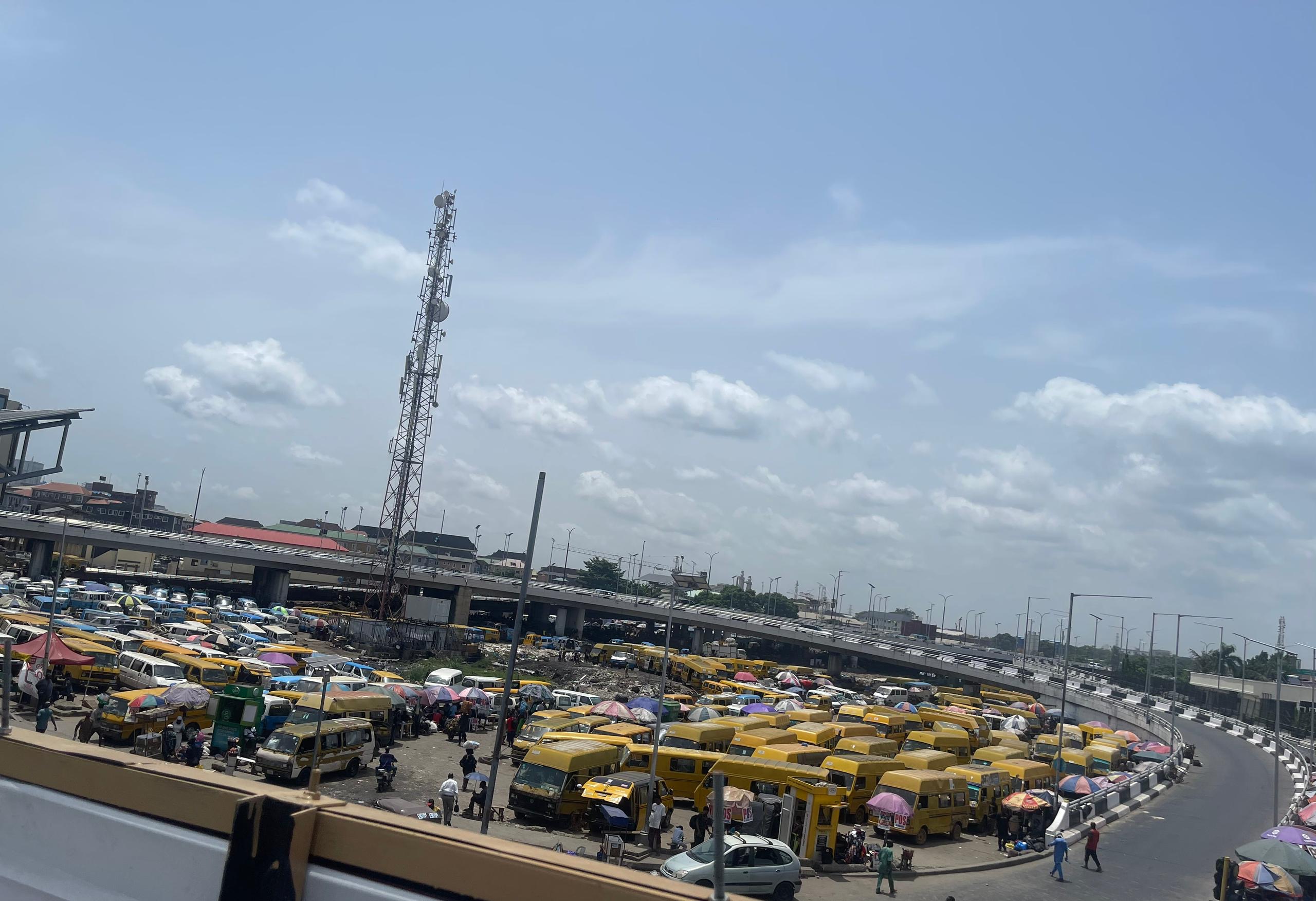



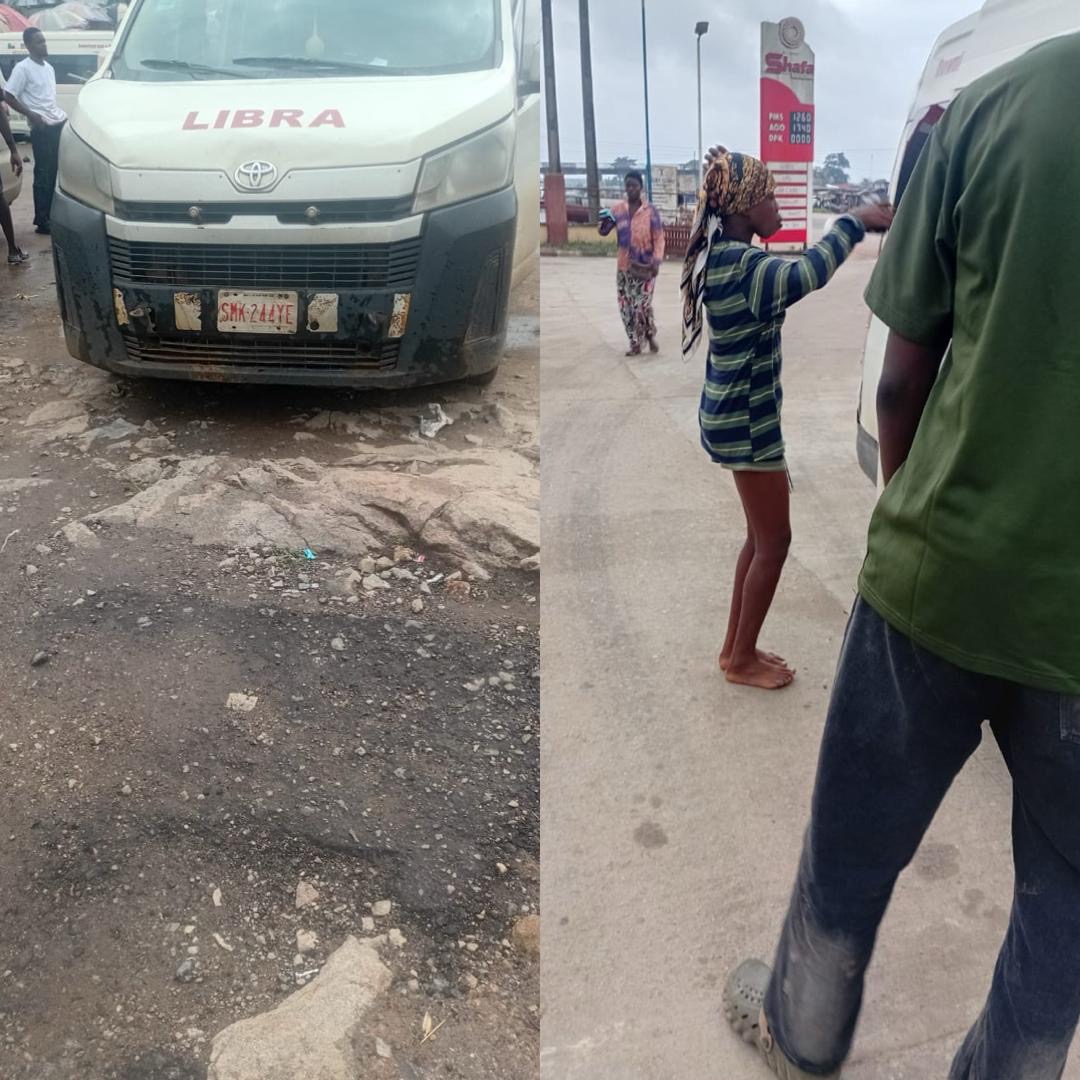
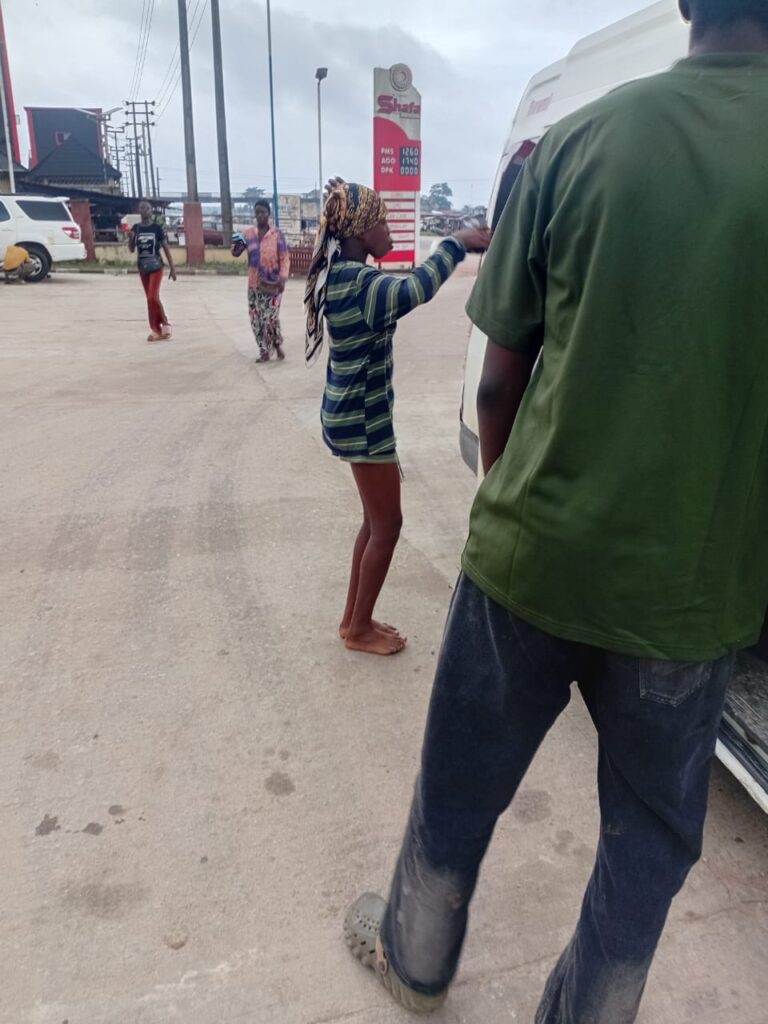
Disguised as their guardian, a man was in a hurry to leave the motor park in Warri as he put three girls on a bus.
It was a Friday morning and the bus was bound for Lagos.
“Answer me quickly, I don’t have time. Take the money and let me leave here,” the man, who looked quite unkempt, according to the whistleblower, told park operators along the Sapele-Warri road by airport junction in Delta State.
Information about him could not be immediately ascertained, but he successfully put three female minors, aged 16, 15 and 14, on the passenger bus and sorted their fare.
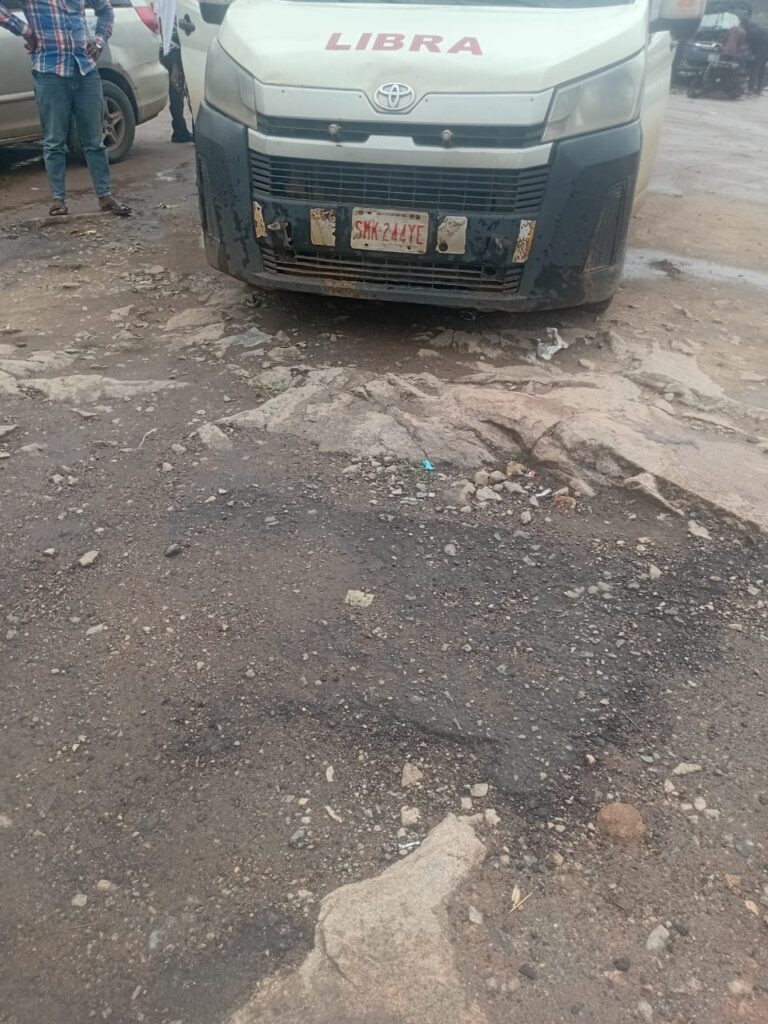
“We are in a 14-passenger AC Hiace bus, Libra Motors, SMK 244 YE. I will confirm if it is Lagos or Delta plate number. I only copied this number from the ticket I was given,” the whistleblower, Isiah Edu, who was a passenger on the bus, said in a distress message sent to Third Lens after suspicions.
Edu, alongside another lady, became suspicious when they realised that the man who put the girls on the bus was acting unsettled.
The lady, who could not contain her suspicions, decided to engage the girls as the journey began. She spoke in the local dialect the girls were communicating with.
“I began interrogating the girls without making them suspicious,” she said, noting that she had to inform the passenger beside her of what was happening.
“Immediately she hinted me about it, I whispered that she only confirmed my suspicions as well,” Edu said.
“I started hearing from the girls, who seemed enthusiastic and unclear at the same time, statements like, ‘they have bought the phone for me,’ ‘when will I get my own phone?’ ‘We don’t even know what we will eat when we get there.’ ‘Where will we sleep?’” He narrated.
At that point, Eju said he had no choice but to raise the alarm to concerned stakeholders.
“I immediately contacted my acquaintance, Sodunola Obafemi, to reach out to a journalist he knew.”
“At that point, we suspected that the girls might be on a journey of child trafficking,” the passenger lady, who prefers anonymity for personal reasons, told our reporter.
“I was only in the mood of celebrating my birthday that morning when the information got to me,” Obafemi, who shared our reporter’s contact with Edu, said. “But I’m a parent myself and I felt compelled to stop it.”
The tracking
Our reporter, Obafemi and Edu began communicating, and the Ondo State Police Command was contacted because, at that period, the vehicle was approaching Ore around 1pm.
“Breaking the news when the whistleblower escalated the matter to us was not the priority as a media house, but ensuring the rescue of the kids from a precarious journey they were being lured into was more important,” said Omowumi Abraham, the sub-editor at Third Lens.
“We believe the news can be reported later, and that was what we did. So we decided to quietly work with the police to ensure the vehicle was tracked and intercepted,” she added.
Third Lens reports that the Ondo police immediately swung into action after the police commissioner was contacted.
As the vehicle navigated the roads along the hilly parts of Ondo, the network began fluctuating, and communication was perpetually lost with Edu, who was the point of contact on the bus.
The Divisional Police Officer in Ore, DPO Etefia, who led the operation, after noticing the challenge of communication, ordered that checkpoints be mounted by officers at strategic locations.
“Tell the man to come down once they reach any checkpoint, the officers have all been informed,” the DPO told our reporter, but Edu could not even be reached at this time and tensions rose over the possibility of missing the vehicle.
Then another message came in from the passenger some moments later: “Once we are approaching Ore, probably this Libra Motors may have their own park, I will inform you guys. But we may not have more than 20 minutes to stay there.”
“I can’t stop the car myself, I expect the police to spot the vehicle number, name of the transport company and stop the vehicle,” Edu said, replying to a previous message sent to him about coming down at any police checkpoint.
There was a twist to the journey when the bus eventually parked at a restaurant identified as Muna’s Restaurant, beside Famoch petrol station, where some passengers wanted to eat.
Edu immediately sent the address to our reporter, who then sent the same to the DPO.
While the officers said they were racing down to the restaurant, time was not on the side of other unsuspecting passengers who were in a haste to proceed on their journey.
“I then approached the driver to tell him about what was going on and why he needed to cooperate because the police were already involved.
“The driver obliged and decided to cause delay as if the vehicle was faulty. The police eventually met us there,” the passenger narrated.
New drama
According to Edu, when the police arrived, they asked all parties, including the three girls and the driver, to come to the station, but the driver became reluctant.
“At some point, he even stylishly disappeared and we were looking for him before he later reappeared from nowhere. His fear was that his employers might sanction him for going to the police station.
“It was until I persuaded him and the police also threatened to tow his vehicle, that was when he agreed.”
Third Lens contacted the DPO later, and he said they had to transfer the case to another division, known as the Otu Costain Division, because where they intercepted them was no longer Ore.
‘The three minors were bound for Mali’
Edu, who followed them to the station, said they were able to ascertain that the girls were to be transported to Mali.
“They were being lured into prostitution and they were to be transported to Mali when they arrive Lagos,” he said.
Third Lens gathered from the police that the girls were kept in custody, but they did not give details of the preliminary investigation.
“They are in our custody. We are still investigating,” the DPO of Otu Costain, Adebayo Funmi, told Third Lens.
It was further gathered from the DPO on Sunday morning that the children had been transferred to the state Criminal Investigation Department.
“They are with the State CID,” she said when asked for an update.
However, according to Edu, what was most shocking was the moment one of the girls tried to implicate the lady who engaged them on the bus to get information.
“One of the girls, the most senior, decided to accuse the lady of being the one leading them to Lagos. They felt like they were sold out because they confided in the adult passenger. So they wanted to drag her along to ensure she was arrested as well. This is to tell you how wild these girls had already become,” he said. “It was more like they were even protesting their rescue.”
“They must have even given fake names, the one I remember gave her name as ‘Winibar’ as it sounded. Neither the officer nor the girl could spell the name,” Edu said.
“Another one said she had been into the act for some few years now. That she was even brought into prostitution by her mother.”
“The three girls confessed at the station that they were into prostitution in Bayelsa,” he added.
Girl child advocate reacts
A girl child advocate and gender specialist, Omolola Pedro, said what was happening spoke to the unfortunate realities that vulnerable girls had been forced into largely because of their poor backgrounds.
Pedro said, “Many girls in the South-South and South-East have been lured into child trafficking, exposed to child abuse, forced into child labour and even lost their lives. This is happening because the government has failed in its responsibilities to cater for children, they have failed to ensure decent and sustainable works for the parents neither did they mandate public education for children.”
According to Pedro, many of such girls usually begin from roaming the streets and to hawking as early as seven and eight years old where they become preys and easy targets for traffickers.
“It is also very unfortunate that some parents and guardians are complicit in exposing innocent children to the act of prostitution.
“The Ondo police must ensure they trace the culprits behind the trafficking scheme and the government must provide rehabilitation for the girls and put them in schools,” she added.
All rights reserved. This material, and other digital content on this website, may not be reproduced, published, broadcast, rewritten or redistributed in whole or in part without prior express written permission from Third Lens.
Contact: theeditor@thirdlensng.com