
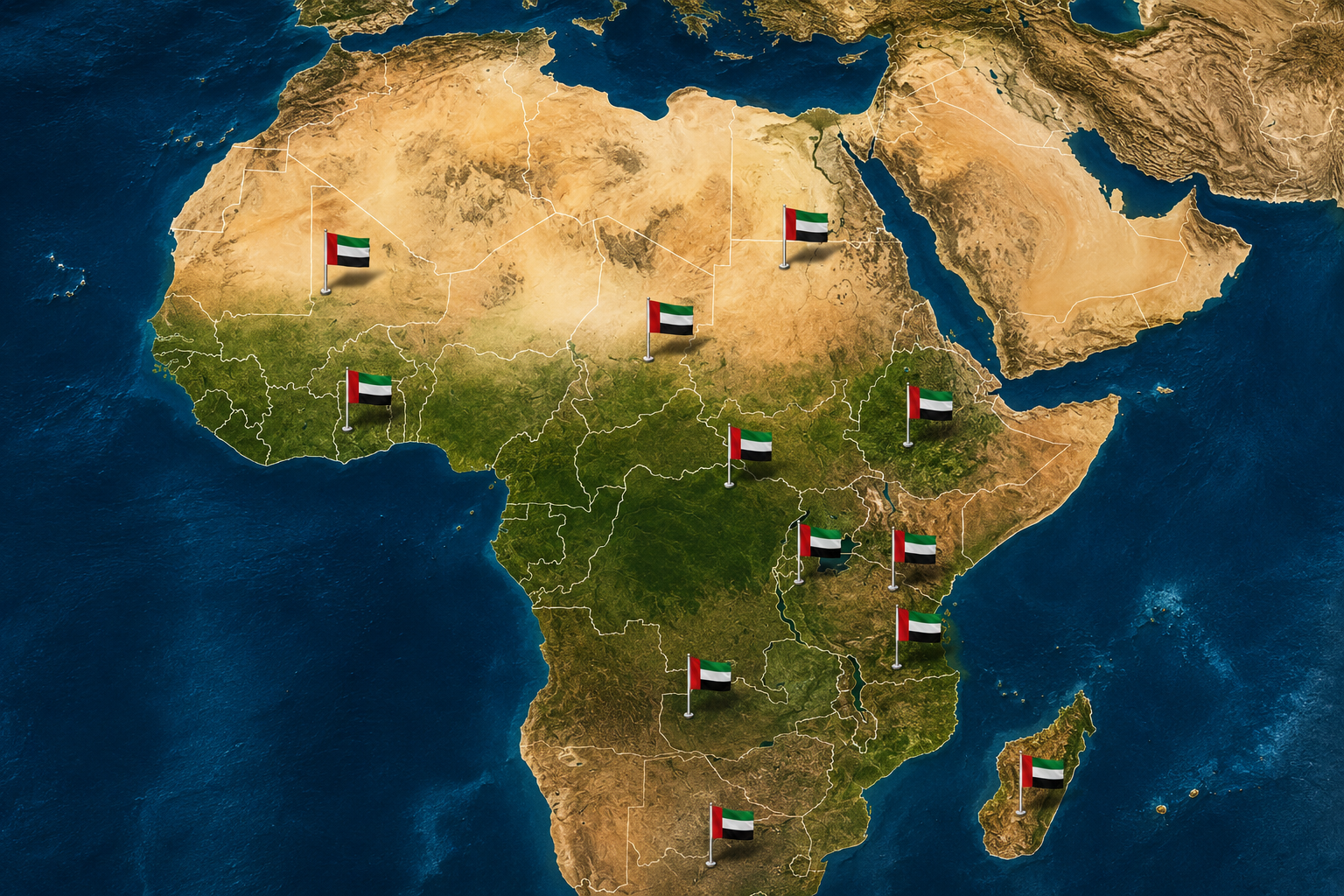
The United Arab Emirates is spreading its tentacles in Africa through investments in agriculture, real estate, ports and helping countries on the continent to achieve their green economy drive.
The African-UAE cooperation has been on the rise since the early 2000s, according to African Business. Artur Frantz, a research fellow at the South American Institute for Policy and Strategy, says interest spiked when Dubai sought to diversify its oil-based economy by investing in hydrocarbons revenues abroad, including investments in African infrastructure, tourism, agribusiness and mining. The medium noted that the oil sector’s contribution to the UAE’s GDP dipped from 57% in 1975 to 17% in 2020.
What is not given is whether the UAE’s investments in Africa actually translate into fortune for local communities in the targeted countries or negatively impact them, especially in the forms of possible displacement and environmental implications.
The UAE continues to drive investments in African countries despite pushbacks from other global economic powers amid the economic and security instabilities rocking the continent.
For the UAE, it appears the limited competition from other global powers places Emirati establishments at a good advantage to exploit African resources and exert greater economic and security influence through the projects.
According to farmlandgrab.org in a 2024 report, the UAE had 14 land acquisition deals in the pipeline, mainly in Africa, as it looked to keep food security high on its policy agenda. As of then, it had already signed 56 land agreements, with the first completed more than 50 years ago in Sudan.
The 14 deals were subject to either an expression of interest, a memorandum of understanding or active negotiations, the medium explained, crediting a BMI report that cited data from the website Land Matrix.
The pace of acquisitions has accelerated over the past two decades, with the food price crisis of 2007/2008 precipitating a marked rise in activity.
“It seems probable, therefore, that the recent disruptions to global agricultural markets – COVID-19, a triple-dip La Niña and the Russia-Ukraine war – will see the UAE’s interest in such deals accelerate again,” it quoted the BMI as saying.
According to The Guardian, between 2019 and 2023, Emirati companies announced $110bn (£88bn) of projects, $72bn of them in renewable energy.
The 2024 report revealed that the pledges were more than double the value of those made by companies from the United Kingdom, France or China, which pulled back from big-ticket infrastructure investment projects in Africa after many failed to deliver expected returns. African leaders were also disappointed with climate finance pledges by Western governments. At the COP29 climate conference, for example, wealthy countries promised $300bn annually, whereas developing countries had demanded $1.3tn.
African leaders welcoming investments
African leaders generally welcome foreign investments, as most countries on the continent even rely on loans from developed nations to finance some major aspects of their economies.
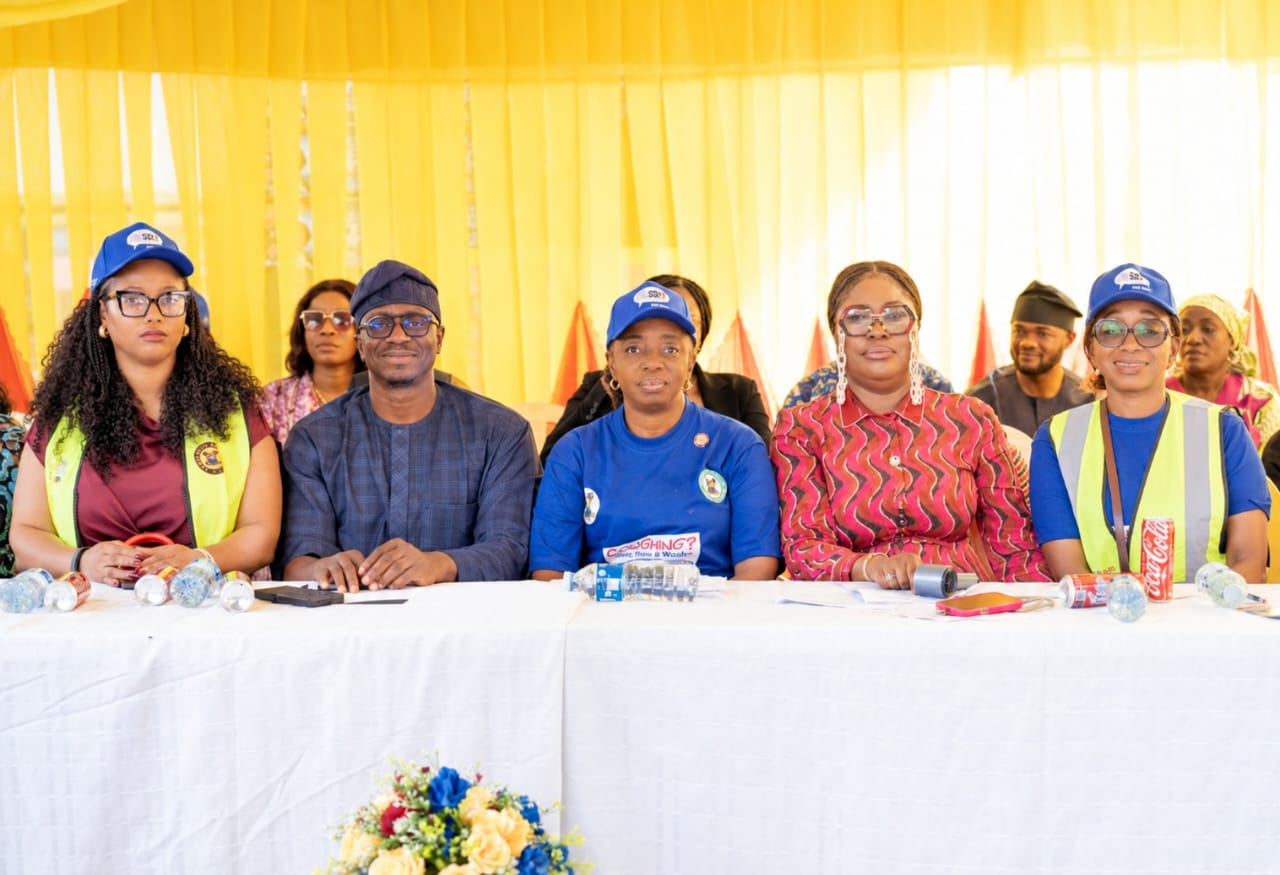
In November, African Business reported that Nigerian President Bola Tinubu’s administration opened talks with the government of the UAE – already identified as the prime destination of gold moved out of Nigeria – to help staunch the flow. This formed the subject of discussion in a meeting in late October between Nigeria’s minister of solid minerals, Dele Alake, and the UAE ambassador to Nigeria, Salem Saeed Al Shamsi.
In a September 2023 State House Press Release sighted by Third Lens, the Nigerian President and President of the UAE, Mohamed bin Zayed Al Nahyan, in Abu Dhabi, finalised a historic agreement, which resulted in the immediate cessation of the visa ban placed on Nigerian travelers.
Beyond that, the statement said in recognition of President Tinubu’s economic development diplomacy drive and proposals today presented by President Tinubu to his counterpart, “an agreed framework has been established, which will involve several billions of U.S. dollars worth of new investments into the Nigerian economy across multiple sectors, including defense, agriculture and others, by the investment arms of the Government of the United Arab Emirates.”
Like Nigeria, African countries like Liberia, Ethiopia, Sudan, Zimbabwe, Angola, and Egypt also appear to be the UAE’s primary focus.
Vera Songwe, founder of the Liquidity and Sustainability Facility – a finance mechanism aimed at improving the liquidity of African sovereign debt – told African Business that the bid to diversify from the UAE’s resource-driven economy meant that the relationship with Africa had more depth than simple resource extraction.
“The focus is on economic growth, job creation, and green development rather than short-term extraction of resources,” she added. While some countries on the continent welcomed the increased interest from the Emiratis, some activists and analysts expressed fears that the UAE’s poor record on labour rights for migrant workers, continued support for hydrocarbons and failure to address environmental issues would characterise its investments in Africa.
“African countries are in dire need of this money for their own energy transitions,” said Ahmed Aboudouh, an associate fellow at the Chatham House think tank. “But at the same time, they (the Emiratis) come in with less attention to labour rights, to environmental standards.”
According to a report by CNN in 2023, a Dubai-based firm, Blue Carbon, had secured forested land nearly equivalent to the size of the UK across five African nations to run projects to conserve forests that might otherwise be logged, preventing huge amounts of planet-heating carbon dioxide, or CO2, from entering the atmosphere.
A member of the Dubai Royal Family, Sheikh Ahmed Dalmook al-Maktoum, signed an unprecedented memorandum of understanding with Liberia at the United Nations’ COP28 climate summit, hosted by the UAE in 2023. Under the terms of the agreement, the Liberian government would grant the company he headed, Blue Carbon LLC, exclusive rights to one million hectares of its forests – 10% of the West African country’s total forest area – for 30 years.
“This bilateral association marks another milestone for Blue Carbon,” the Prince told the Emirati Press, according to a report by Le Monde.
The aim is ambitious: to “help transition to a low-carbon economic system” by enabling governments around the world to reach “their Net Zero goals in compliance with the transferability of credits under Article 6 of the Paris Agreement.” The “credits” referred to by the sheikh are carbon credits, which companies can buy to avoid having to reduce their emissions.
Article 6 of the Paris Climate Agreement, reached in December 2015 at COP21, authorised signatory countries to work together to achieve their greenhouse gas emission reduction targets. It means that a country reducing its emissions beyond its forecasts can sell its surpluses in the form of credits to a more polluting country, which can use them to offset its own emissions.
The idea has been criticised. A specialist in carbon markets, Jutta Kill, said, “This notion of offsetting is the subject of much debate.” “Allowing industrialised countries to use carbon credits under the Paris Agreement allows them to escape their responsibilities, simply because they can afford to pay.”
The UAE deals have caused controversy over human rights, environmental degradation, and national sovereignty.
In Tanzania, thousands of Maasai people were reportedly forced from their ancestral lands to make way for safari and hunting projects tied to UAE companies.
Land rights
Indigenous and customary landowners in African countries have, in some cases, been evicted to clear the way for foreign projects, as they witness their homes, once deemed nearly valueless, transformed into cash cows for polluting companies and countries.
The Forest Peoples Programme, a non-governmental organisation, says that such evictions have become more common in Kenya since it began allocating land for carbon credits. “Those in control of Africa’s forests stand to earn a lot of money, and corporations appear to be pursuing a new ‘scramble for Africa,’” Justin Kenrick, a senior policy advisor at the Forest Peoples Programme, told CNN.
“Meanwhile, such ‘conservation’ in Kenya persists with a failed colonial approach of evicting the very communities who know best how to conserve their forests.”
A lawyer and labour migration policy expert, Babatunde Titilola, who spoke with Third Lens, said he believed the Middle East, particularly Saudi Arabia, should be rightfully concerned with food security because the major limiting factors in agricultural production for desert countries are land and water.
Titilola said, “A few years ago, it was estimated that by 2050, Saudi Arabia is expected to be importing all of its domestic needs. And that brings us to the idea of the UAE coming into African indigenous communities for agricultural sustenance.”
He harped on land rights, emphasising that the UAE’s approach to acquire land in Africa reflects a broader trend of resource-driven investments by wealthy states and corporations outside the continent.
“Land rights for indigenous communities are a deeply sensitive issue because they go beyond economics. They touch on culture, heritage, and survival. Indigenous peoples often rely on their ancestral lands not just for livelihood, but also for identity and continuity of tradition. When large-scale land acquisitions happen, whether under the banner of agriculture, conservation, investment or infrastructure, there is always a risk of displacement, loss of access to resources, or environmental damage.
“While such projects can bring jobs, technology, and infrastructure, they also tend to drive labour migration, as people who lose land are forced to move to urban centres or seek work in the very projects that displaced them. This raises concerns about the rights of indigenous workers who are often employed on exploitative terms with limited protections and little say in decision-making,” he told our reporter.
Titilola stressed that legally, the acquisitions highlight the tensions that exist between cross-continental human rights norms, domestic land tenure systems, and cross-border investment laws.
He added, “Many African countries have constitutional or statutory provisions recognising customary land rights, yet enforcement is weak when national governments prioritise foreign investments. The absence of clear legal remedies for struggling indigenous communities often means disputes are settled politically rather than judicially, leaving affected cultural groups without effective recourse.
“Enacting strong legal protections through binding contracts, enforceable community-focused agreements, and adherence to international conventions on indigenous peoples’ rights and privileges all form part of critical measures to balance investment interests with justice.
“So, for these acquisitions and investments to be sustainable and ethical, the UAE and its corporations must ensure transparent consultations with local community leaders, not just the government, project legally binding safeguards on indigenous land rights, and promote strong labour standards that protect indigenous workers from exploitation and abuse. Otherwise, the benefits will flow outward while the social, cultural, and ecological costs are borne locally by struggling indigenes. Investment without genuine inclusion risks repeating the same patterns of dispossession, marginalisation, and colonisation that Africa has faced historically.”
What we’re doing in Africa – UAE
The UAE said it is the fourth largest global investor in Africa with investments totaling $60 billion, highlighting its investments in clean and renewable energy in Africa to be valued at $4.5 billion. This is according to the UAE Ministry of Economy & Tourism.
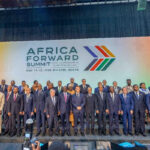
In a statement published on its website in late 2024, the ministry explained that in cooperation with Invest Africa, it organised a new edition of The Africa Debate – UAE in Dubai.
The event brought together more than 400 businessmen and representatives of local, regional and global investment, finance and trade agencies and institutions, and explored the emerging economic, trade and investment opportunities in Africa.
The ministry stated, “The hosting of The Africa Debate aligns with the UAE’s adoption of an economic openness outlook and the strengthening of trade and investment relations with all global partners, especially the African continent, which is an economic, investment and trade destination full of sustainable partnership opportunities in the fields of energy, infrastructure, digital transformation, renewable energy, agriculture, food safety, and new economy.
“This will cement the UAE’s position as a leading economic powerhouse that links the African continent and various global markets in line with the ‘We the UAE 2031’ vision.”
According to the statement, the economic and investment cooperation between the UAE and Africa had continued to grow, noting that the UAE was also home to more than 21,000 African companies that operated in key economic sectors. “The UAE is also a leading export destination for African markets.”
It added, “The sessions discussed the remarkable growth in the UAE’s investments in clean and renewable energy projects in Africa, which amount to $4.5 billion. It forms part of the country’s efforts to bridge the climate projects financing gap in the continent; optimally exploit energy resources in Africa as well as opportunities to enhance trade and investment relations between the Gulf region and Africa in this vital sector.”
The ministry explained further that the forum touched on the UAE’s strategic role in developing African ports, particularly the role of Abu Dhabi Ports Group in developing logistics and trade networks on the continent, reducing trade costs, improving market access, and creating new paths for more investments.
All rights reserved. This material, and other digital content on this website, may not be reproduced, published, broadcast, rewritten or redistributed in whole or in part without prior express written permission from Third Lens.
Contact: theeditor@thirdlensng.com