
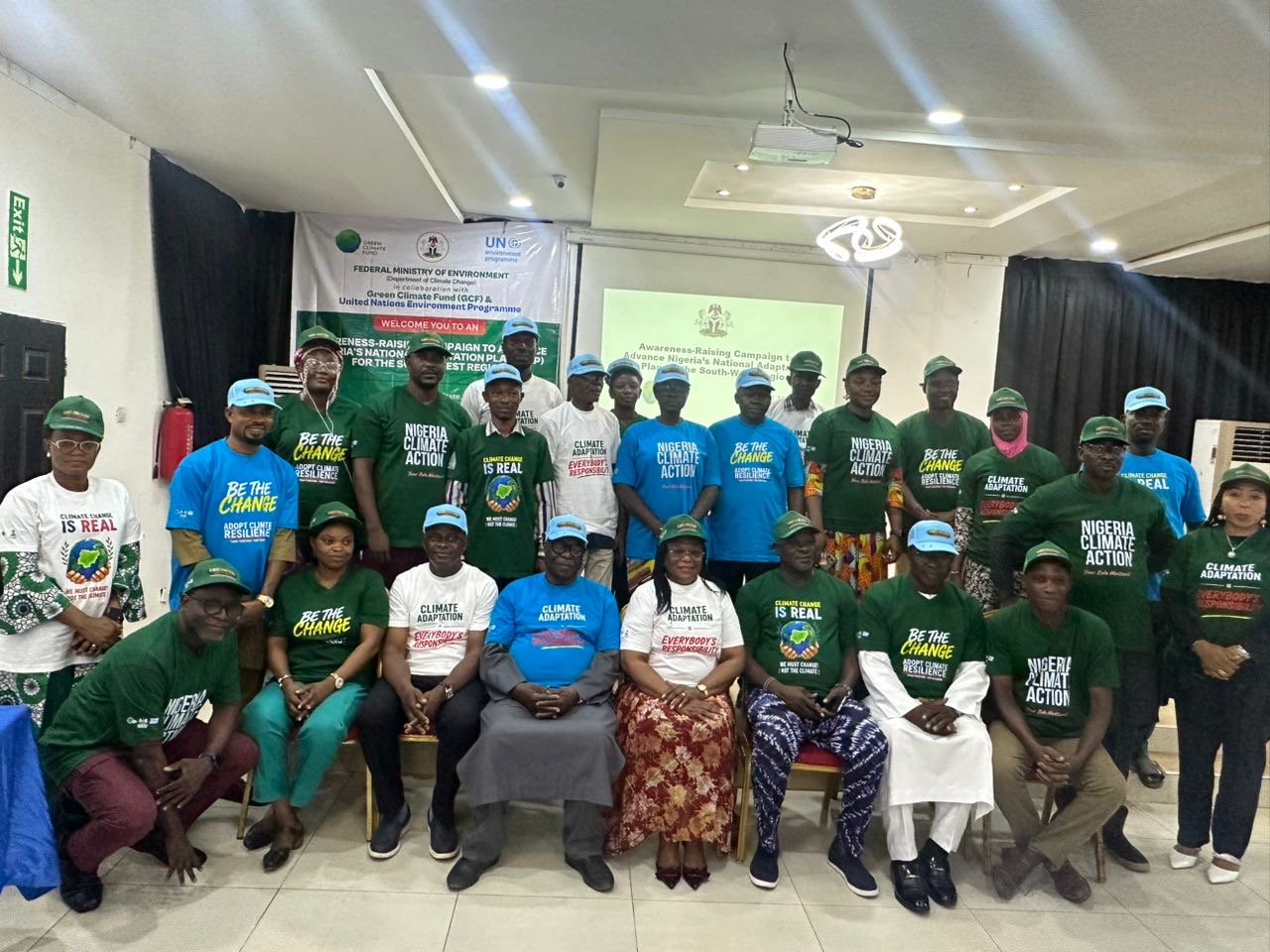
The Federal Ministry of Environment, in collaboration with the Green Climate Fund (GCF) and the United Nations Environment Programme (UNEP), has intensified awareness efforts on Nigeria’s National Adaptation Plan (NAP), with officials stressing the urgent need for stronger climate action, local funding and public awareness.
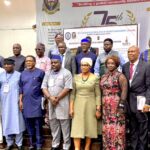
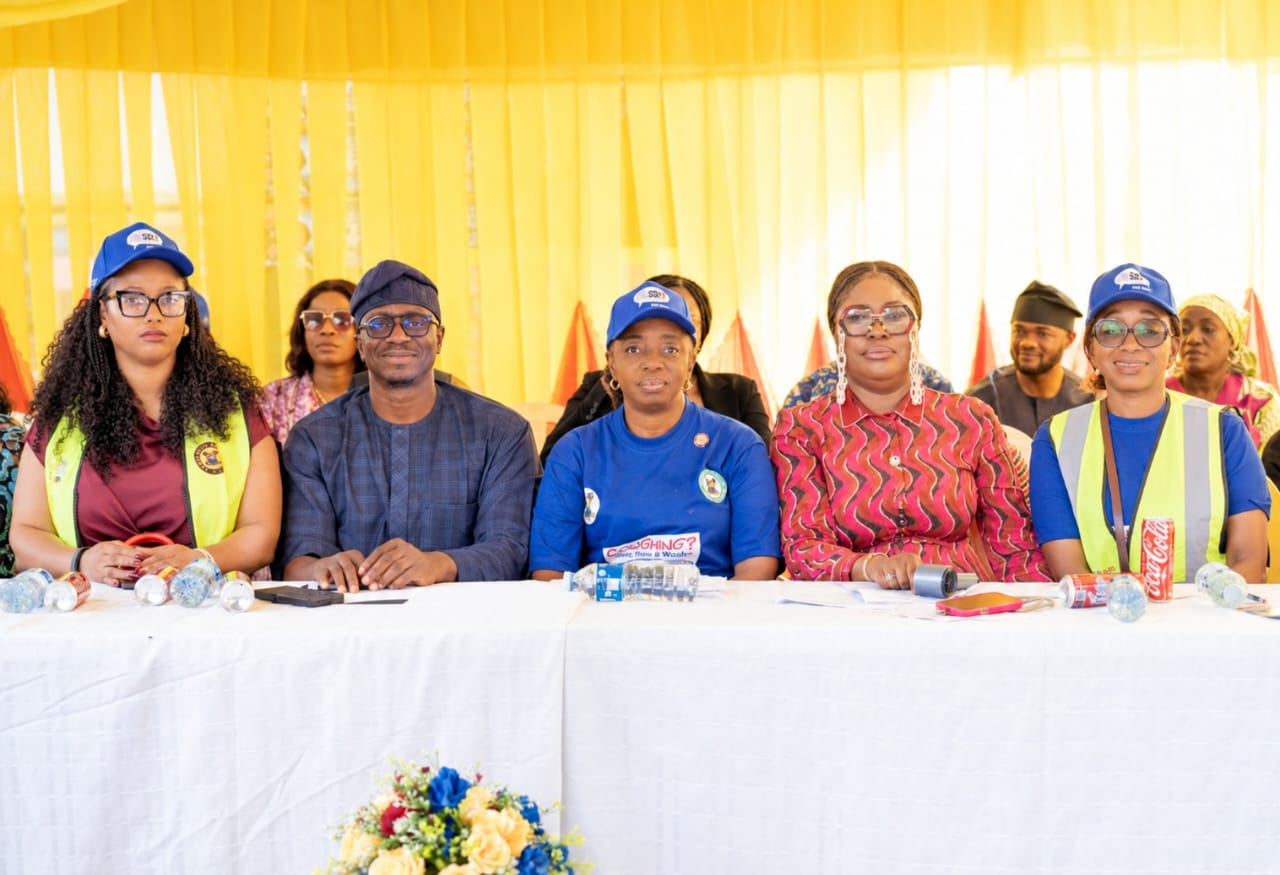
The event, held on Thursday, May 14, 2026, in Lagos, convened stakeholders and representatives of Ministries of Environment from South-West states including Lagos, Ogun, Oyo, Osun, Ondo and Ekiti. Also in attendance were the Director of the Department of Climate Change at the Federal Ministry of Environment, climate experts, government officials and development partners, to discuss strategies for advancing Nigeria’s climate adaptation agenda.
Speaking during the awareness-raising campaign on the National Adaptation Plan for the South-West region held in Lagos, the National Project Coordinator of the National Adaptation Plan, Kayode Aboyeji, said the initiative has reached a critical stage focused on disseminating findings gathered across the country.
According to him, the adaptation plan was developed in line with the request of the United Nations Framework Convention on Climate Change for developing countries to establish strategies for adapting to climate impacts.
“The importance of what we are doing today is to create awareness on the national adaptation plan for Nigeria,” Aboyeji said.
“This is a process that started some time ago and now we have come to a critical point where we need to disseminate the information on the findings that we were able to gather across the country to prepare and ensure that we have a planning process to adapt to the impact of climate change.”
He explained that the project identified major climate hazards affecting Nigeria after conducting nationwide assessments across geopolitical and ecological zones.
“We have been able to identify the major hazards of climate change in Nigeria, the exposures, the risks and the vulnerabilities,” he stated.
Aboyeji listed flooding, drought, desertification, sea level rise and heat waves among the major climate threats currently facing the country.
On financing climate adaptation efforts, he noted that while funding remains important, behavioural change and government commitment are equally critical.
“When it comes to adaptation, finance is needed, but beyond finance, there are practices and changes of mindset that Nigerians need to imbibe,” he said.
He added that the adaptation plan recommends that federal, state and local governments begin integrating climate adaptation into annual budgetary allocations rather than depending heavily on foreign donors and climate funds.
“Climate change has come to stay. For us to be able to protect our means of livelihood and adapt to these projected extreme weather events, we need to start planning and allocating resources even at the national level,” he added.
Responding to concerns about whether environmental issues are sufficiently funded in Nigeria, Aboyeji acknowledged existing government efforts but maintained that more action is needed.
“Government is trying and making efforts, but there is need to do more so that we can address some of these challenges,” he said.
He further explained that the current phase of the project mainly focused on research, vulnerability assessments and planning, while Nigeria is now gradually moving toward implementation.
“What we have done is a planning process to establish that these climate issues are happening and to identify what can be done. Nigeria is now moving into the implementation stage,” he said.
Also speaking at the event, Director at the Department of Climate Change (DCC), Dr Iniobong Abiola-Awe, described the Bola Tinubu administration as committed to addressing climate change challenges in Nigeria.
In addition, the Deputy Director of the DCC, Mr Jonah D. Barde, said the administration has demonstrated interest in climate issues through participation in international climate conferences and nationwide awareness campaigns.
“You will notice that in all the international conferences being held, the government either attends personally or sends high-level delegations. That shows how much the government cares about climate change,” Barde said.
He cited the Renewed Hope Awareness Creation on Climate Change programme as one of the major initiatives under the current administration.
“It is expected that we go around all the 774 local government areas in the country to create awareness on the causes, impacts and solutions to climate change challenges,” he added.
Retired Professor of Climatology, Emmanuel Oladipo, also defended the credibility of the new adaptation plan, saying it differs from previous climate strategies because it involved broader stakeholder participation and stronger institutional backing.
“This one went through a more lengthy process and included a lot more stakeholders, making national acceptability much higher,” Oladipo said.
He explained that unlike earlier climate adaptation frameworks that relied heavily on external support, the current plan is expected to receive stronger backing through national institutions and approval from the Federal Executive Council.
“That would make implementation more likely than previous ones,” he noted.
Speaking on expected outcomes within the next two to five years, Oladipo said increased public understanding of climate change remains a major goal.
“If people do not understand what they are fighting, they cannot respond effectively,” he said.
He added that improved public awareness could also strengthen government commitment to integrating climate adaptation into national development planning.
According to him, while climate disasters such as flooding may still occur, proper adaptation measures could significantly reduce fatalities and damage.
“The aim is not that floods will stop completely, but that their impacts will no longer be as devastating as before,” he said.
All rights reserved. This material, and other digital content on this website, may not be reproduced, published, broadcast, rewritten or redistributed in whole or in part without prior express written permission from Third Lens.
Contact: theeditor@thirdlensng.com