






By David Oluyide
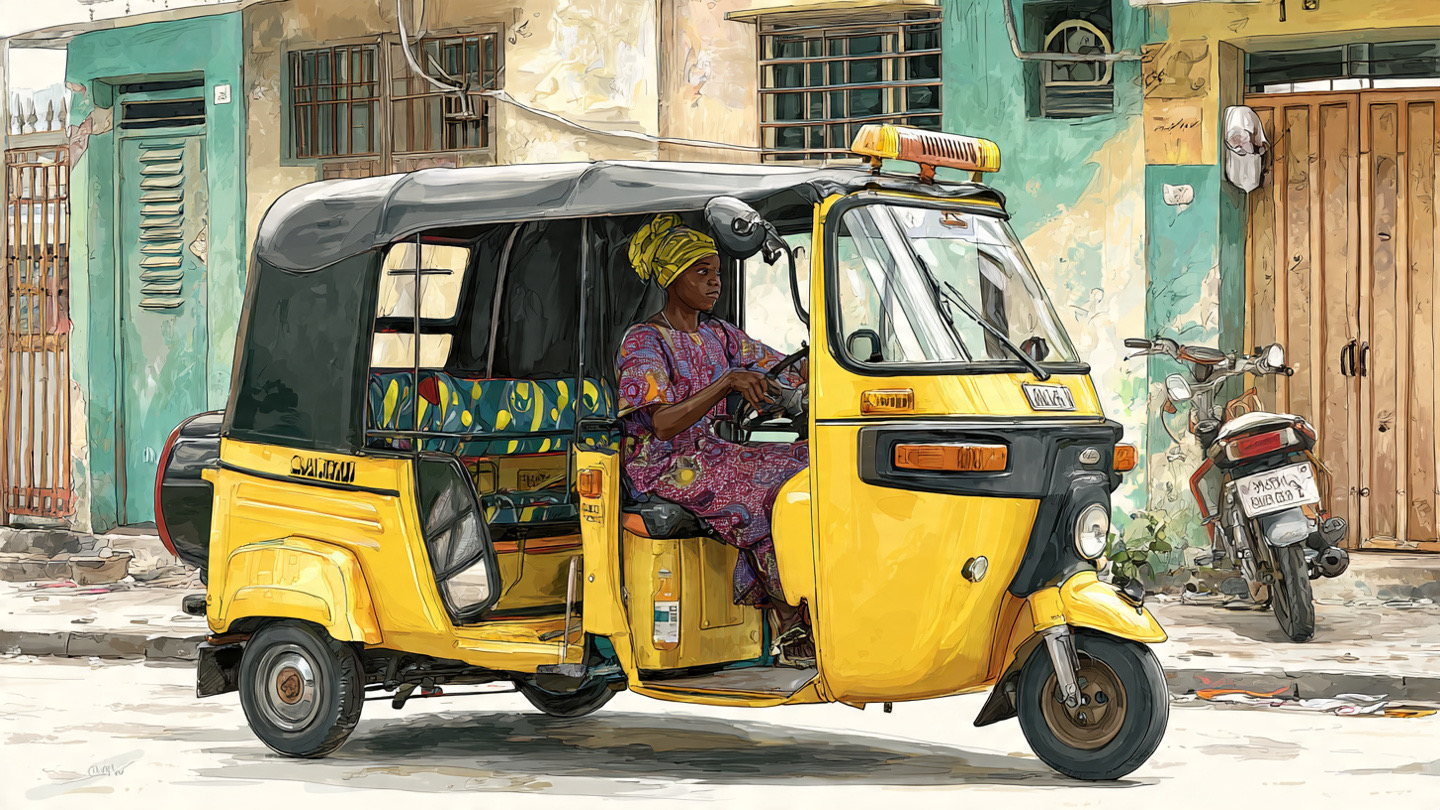
Riding tricycles, popularly known as Keke, has been a lucrative venture but has largely been a male-dominated occupation in many parts of Nigeria.
It has also been a means of livelihood for a significant population across the world.
It contributes to the economic development of the society where it is used.
On the campus of Ekiti State University (EKSU), Keke is a major means of transporting students and commuters within the school premises.
Most of the riders are known to be male, but in recent times, women are changing the narrative.
Female Keke riders are often faced with various challenges; however, despite all these, they continue to do their work professionally and pay no attention to gender barriers.
Yemisi Aderogba, a 37-year-old woman who only completed her secondary school education and is married with six children, shared her story, stating what inspired her to venture into riding Keke.
In her words, “There’s no money in town. Also, I don’t want to wait until someone gives me money, and I don’t want to be promiscuous.”
She further stated that even though she has a supportive husband who has been helpful and responsible for the children’s upkeep, she still needs a better income, and this made her resort to the Keke riding business, particularly because her knitting business wasn’t doing well.
She explained that she had not faced any health issues since she started and that her health has always been very good.
“There’s no profession or business without challenges,” Mrs Yemisi said.
She has equally not faced any challenges either from her male counterparts or the students, and her job has been going on smoothly.
In her words, “I have befriended all my male colleagues, so there’s no issue between us. All of them are my husbands.”
She works eight to nine hours each day for five days a week.
Another female rider is also breaking barriers. Mrs Temitope Kolawole, a 31-year-old mother who also completed her secondary school education and has a child, shared her story.
“I was a bag maker, but I wasn’t making enough income for me and my child. The Keke business is stressful; it’s a man’s job, but it’s better than staying idle and wasting time away,” she said.
She stressed the need to work given the economic condition of the country and the biting inflation.
As a single mother, there are more responsibilities for her to shoulder, and that’s why she needs to work hard.
Regarding her health, she stated that it is manageable. She also added that there’s a friendly work atmosphere, noting that there has never been any form of abuse or sexual assault.
On the challenges she faces, Mrs Temitope had a different story, as she gave full details of her daily experiences with the students she transports.
She explained, “There’s no way there won’t be insults from students. Some of them are daring and ill-mannered. They walk carelessly before the Keke, and when I sound the horn, they won’t respond. If I continue to sound the horn, they lash back with insults, saying things like, ‘Didn’t your parents afford a toy for you when you were a kid?’
“Some of them would even run into the Keke, cause an accident, and still blame me. Those students can be really annoying.”
She also did not fail to mention her experience with students who had good conduct.
“I know of a guy called Portable. Some students caused an accident while in his tricycle due to their childish behaviour, but they blamed themselves and allowed the man to leave while they went to treat themselves,” she said.
With her male colleagues, she has maintained a cordial relationship.
She works five days a week and nine hours per day.
Another female rider also shared her story in an interview about her journey into the Keke riding business.
Mrs Aishat Balogun, just like her counterparts, did not further her studies after secondary school.
Married with three children, she also started the Keke business because her hairdressing and pastry-making businesses were not flourishing.
She said, “The country is difficult; that’s why I started riding Keke in order to cater for myself and my children.”
She works together with her husband in the Keke riding business.
One of the challenges she faces while on duty includes students ignoring the sound of the horn. Sometimes, they have headsets on, which prevents them from hearing the horn, and for this reason, she has to drive with more care and attention to prevent accidents or conflicts with students.
These women who have ventured into the Keke driving business are empowering themselves against all odds and making themselves valuable in their respective homes and in society.
These women are paving the way for future generations by overcoming societal reactions and gender discrimination. They have fought all forms of stereotypes against women, standing strong in their decisions and giving future generations motivation and the courage to venture into any profession without fear of societal reaction.
Here are some barriers they have had to overcome:
• Surviving in a competitive market dominated by men.
• Not getting enough passengers. Initially, most people would rather trust a male rider than a female rider in certain situations. Even before a woman enters a Keke driven by another woman, she may think twice.
• Physical strength challenges. Men are generally considered physically stronger than women, which is why they are often found in physically demanding jobs. Transporting passengers from dawn till dusk is difficult work, but despite the odds, these women continue to thrive in the business.
They have been able to overcome these challenges by employing certain measures, including:
Maintaining a cheerful disposition: Naturally, it is difficult to resist a beautiful woman, but even more difficult to resist a joyful woman beaming with smiles and radiating warmth. These women engage passengers in friendly conversations in an attempt to attract customers.
Looking presentable: As the popular saying goes, “Looking good is good business.” These women have also taken this into consideration and put effort into looking their best while on duty, as this attracts more passengers and earns them respect.
It is important to note that even if a field is dominated by men, it does not mean women will not thrive in it. While men may be doing well in a particular industry, women can also excel if given the opportunity. One should not jeopardise ambitions or careers because of gender discrimination, as this could hinder meaningful contributions to society and discourage future generations.
The world is evolving, and women’s participation in social matters has greatly increased over the years. Women are equally intelligent as men, and their contributions cannot be overemphasised. Women are taking up leadership roles across the world in various sectors, from finance to health and especially education. Women are attaining political positions and breaking records. The entertainment industry is not left out. Women are everywhere in the workforce. They are groundbreakers who remain steadfast and productive in highly competitive environments.
All rights reserved. This material, and other digital content on this website, may not be reproduced, published, broadcast, rewritten or redistributed in whole or in part without prior express written permission from Third Lens.
Contact: theeditor@thirdlensng.com