

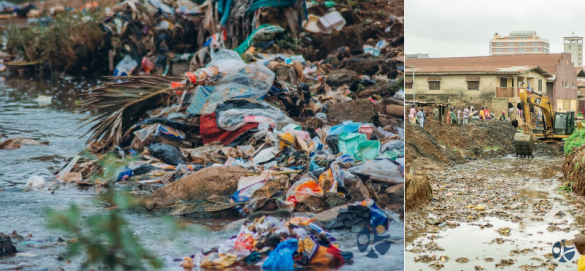

For residents of the inner core of Ibadan, the Oyo State capital, basic sanitation remains a daily struggle. In communities like Beere, Oje, Gege, Yemetu and adjoining areas, many houses were built decades ago without provision for toilets. A walk through the neighbourhoods reveals a common, risky practice where residents resort to water channels and streams to ease themselves, their bathrooms mostly located directly at the back of their houses.
It was this reality that drew the Karim Adeyemi Foundation, KAF, to intervene.
Starting with water, the Foundation has in the last two years delivered a sequenced programme of water, sanitation and flood-control projects across Oje Market and its surrounding communities in Ibadan North and Ibadan North East Local Government Areas.
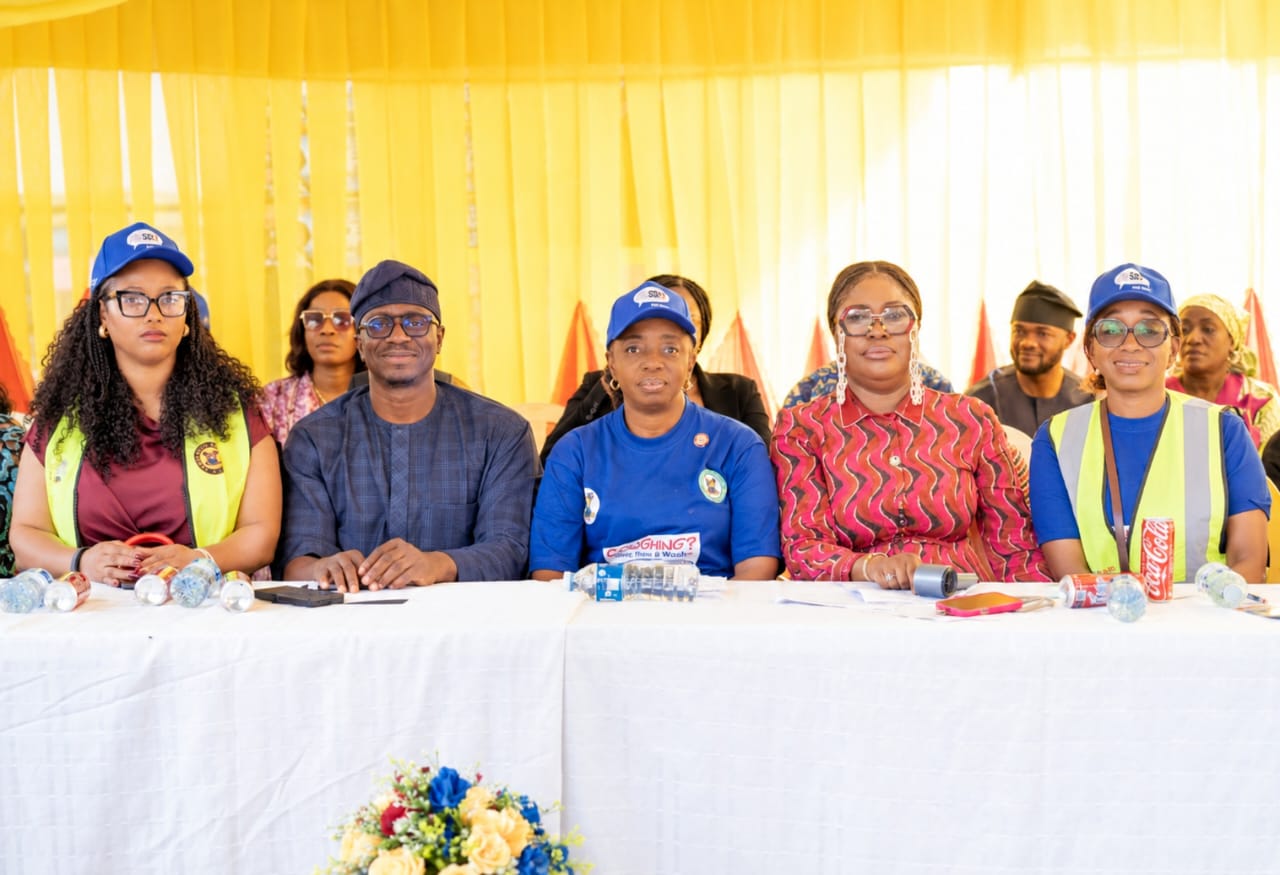
According to the Executive Secretary of the Foundation, Aanuoluwapo Oluyide, the interventions were conceived as a contribution to grassroots development and disease prevention.
“Most of these areas have no good source of potable water. Our commitment is to ensure people at the grassroots also enjoy basic amenities of life and reduce diseases contacted through unclean water and an unclean environment,” she said.
The Foundation did not arrive with a sanitation project. It arrived with water, and it returned.
Its first water point, an electrified borehole at Odo-Osun, was commissioned in December 2023. This was followed by a borehole in Temidire commissioned in December 2024. In total, the Foundation has delivered four electrified boreholes across Oje and the area around its market. Three further communities have now been given a permanent water source.
What the water projects exposed was the scale of the sanitation and flooding challenge. With no toilets, waste was disposed in bags against market buildings and into the water course. Women, in particular, described walking long distances – up to eight compounds to a friend’s house – to manage menstruation, there being no private space. Others bathed behind houses.
In response, the Foundation in April 2025 began construction of a sanitation facility in Oje, built on land donated by the Ajobo Family Compound of Temidire. The family, the only one among several approached who agreed to give ground permanently for public use.
The facility, which opened to the public in early 2026, comprises six toilets and two bathrooms. It was designed on the advice of Oje market traders themselves, including the Secretary of the Fruit Sellers, Mrs Akinade, who recommended a wider squat closet rather than a standard water closet, which blocks easily in public use when pads and other waste are disposed in it.
It is designed as a biogas facility – waste is digested on site and converted to cooking gas. The digester is not yet producing usable volume of gas, the Foundation notes. It is the first intervention of its kind in Ibadan.
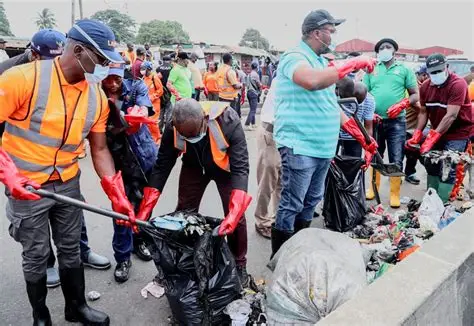
To tackle flooding, the Foundation in August 2025 dredged and excavated over 100 metres of clogged channel and drainage in front of the community – the first clearance in about a decade. Ibadan North East Local Government provided the excavator for the exercise, although Temidire itself lies in Ibadan North. The Local Government subsequently cleared a further 100 metres of the water course at its own cost.
Construction labour for all projects was sourced from the community and paid.
A routine field review conducted by the Foundation in September 2026, approximately one month after the toilet facility opened, provides an early snapshot.
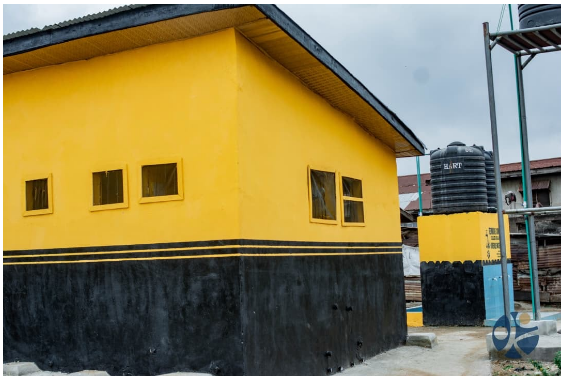
Between 38 and 45 people were using the facility regularly in its first month, of whom eight are women. Seven users interviewed against a structured instrument covering flooding, facility use and maintenance reported consistent water supply and described the facility as the first properly built bathroom they had used.
The operation is self-sustaining. Users pay N100; the revenue covers maintenance and the wages of the attendant, a woman from Oje employed at the facility and paid from its takings. The Foundation does not generate any revenue from it.
On flooding, no flood events and no overflow into homes or compounds were reported during the 2026 rainy season to September. The Foundation is careful not to claim that flooding has been solved. It notes that a channel cleared once will silt again if refuse dumping and defecation in the stream continues.
Similarly, it does not claim to have ended open defecation in Oje. Most residents still use the stream. As the Foundation’s own assessment notes: infrastructure moves faster than habit. A practice sustained across generations does not end because an alternative appears, particularly where the alternative carries a daily charge and the stream does not.
This is where, Oluyide said, government must step in. “The Foundation has built and maintained what it can, and is asking the agencies to join it on enforcement so the work is not lost,” she said.
She appealed to the Oyo State environmental agencies to increase sensitization campaigns against open defecation and indiscriminate refuse dumping in waterways, and to enforce existing environmental laws. “We are encouraging beneficiaries on the need to shun acts that cause more harm to them. Ignorance is not an excuse in law. The Ministry of Environment must wake up to its duty. Enforcement of certain laws is needed to avoid being victims of circumstance when the unexpected happens,” Oluyide said.
“All these projects were put in place as part of our responsibilities in assisting the government in reaching out to the grassroots. We are charging well-meaning Nigerians to key into such projects.”
The Foundation stressed that its message should be framed as an invitation and an appeal, not a rebuke. It acknowledged the cooperation of Ibadan North East Local Government and wants the government to appear well in the story.
Damage to the borehole and tank supports is recorded in the Foundation’s internal monitoring report, which it says is reviewing at six months and one year to ensure long-term sustainability.
For Oje, the lesson is clear: provision has created an alternative that is valued by those using it. Sustaining it will require time, sustained presence, and crucially, partnership with the state on enforcement and public education.
All rights reserved. This material, and other digital content on this website, may not be reproduced, published, broadcast, rewritten or redistributed in whole or in part without prior express written permission from Third Lens.
Contact: theeditor@thirdlensng.com