







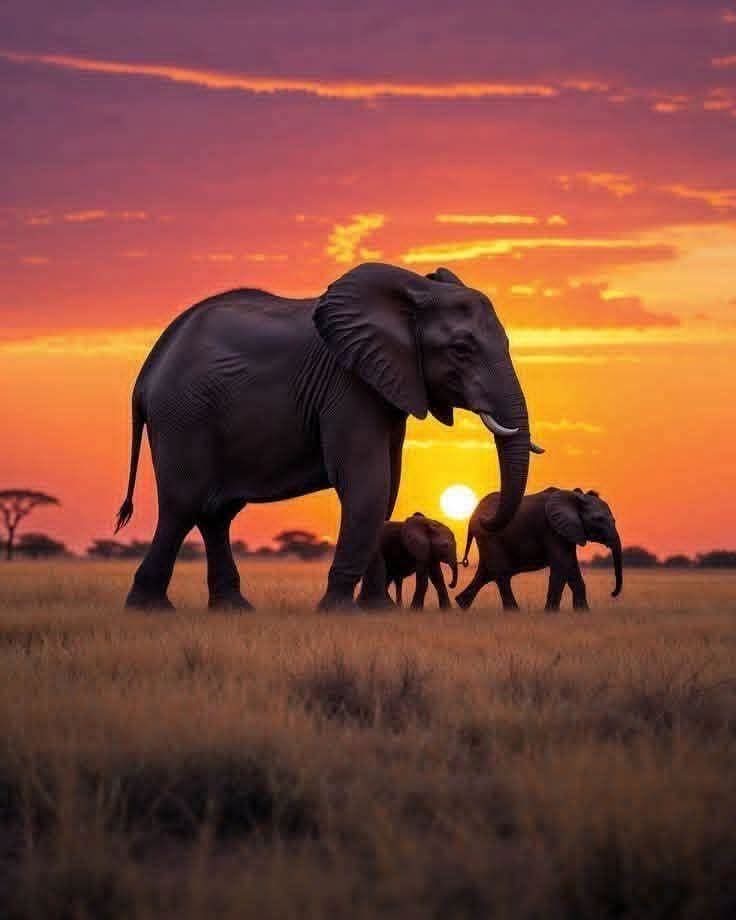
Nigeria’s elephant population has dropped to an estimated 400, conservationists say, with habitat fragmentation, poaching and increasing human-elephant conflict putting the country’s remaining elephants at risk of extinction.
Speaking during a media chat organised by Wild Africa ahead of World Elephant Day, marked annually on August 12, wildlife veterinarian and conservationist, Dr Mark Ofua, said Nigeria is now home to about 300 forest elephants and 100 savannah elephants.
Ofua, who is the West African representative for Wild Africa, said the figure represents a critical population level, warning that further decline could leave the country’s elephants facing serious genetic and survival challenges.
“We still have a few left in Nigeria, about 400 elephants,” Ofua said, explaining that Nigeria is home to the less commonly discussed African forest elephant as well as the savannah elephant.
He said the remaining population includes forest elephants in the southern part of the country and savannah elephants in the north.
Dr Stella Egbe, who leads biodiversity pillar programmes at the Nigerian Conservation Foundation (NCF), explained that elephants are difficult to count accurately because of their movements and the vast areas they occupy.
According to her, scientific methods, including line transects and camera traps, are used to generate population estimates.
Egbe said forest elephants can be found in areas including Omo Forest Reserve, Cross River National Park and parts of Rivers State, while the major population of savannah elephants is found in Yankari Game Reserve in Bauchi State.
She added that some elephants also move across Nigeria’s international borders, particularly between Nigeria and the Benin Republic and between Nigeria and Cameroon.
The conservationists, however, expressed concern over the fragmentation of elephant habitats, noting that forests that once provided large, continuous spaces for the animals are increasingly being broken up by human activities.
Egbe said the situation has resulted in elephants coming into greater contact with humans, particularly in communities where farms have expanded into their former habitats.
She cited Itasin in Ogun State as an example, where elephants returned to an area they had historically occupied but found the landscape transformed by human settlements and farmlands.
The return resulted in elephants destroying crops and increased tensions between farmers and the animals.
According to Egbe, human-elephant conflict can lead to retaliatory killings, while farmers can also suffer significant economic losses.
She said simple deterrent measures, including the use of beehives, chilli fences, noise and other warning systems, could help reduce encounters between elephants and farmers.
However, she stressed that the long-term solution remains the protection of elephant habitats.
“If we stop disturbing their environment, they will do well and they will thrive within that space,” she said.
Ofua also identified poaching, particularly for elephant tusks, as another threat to the species.
He explained that elephants are not primarily hunted for bushmeat but are targeted largely because of the value of their tusks in the illegal wildlife trade.
He also warned that elephants can be accidentally injured or killed by traps and snares set by hunters targeting other wildlife.
Beyond their symbolic value, Ofua said elephants play a critical role in maintaining healthy forests.
He described them as “the tenders of the forest”, explaining that elephants help disperse seeds, create pathways, break down old trees and contribute to the regeneration of plant species.
Some plants, he noted, depend on elephants passing their seeds through their digestive systems before they can germinate.
The conservationist therefore warned that losing elephants would mean losing more than one species.
“If the species around you are disappearing, you should be concerned because it means you are in trouble as well,” Ofua said.
He urged the media to increase public awareness about Nigeria’s elephants, noting that many Nigerians do not even know that elephants still exist in the country.
He recalled his father’s account of seeing large herds of elephants while travelling to school in Delta State, saying that within one generation, the animals had disappeared from the state.
Ofua said conservation education must become more prominent in Nigeria, including in schools, while the government and private sector must increase their investment in protecting biodiversity.
He called for stronger private-sector involvement in conservation, noting that conservation cannot be left to the government and a handful of non-governmental organisations.
As Nigeria marks World Elephant Day on August 12, conservationists are calling for greater awareness, stronger protection of forests and increased investment to ensure that the country’s remaining elephants do not disappear on the watch of the present generation.
All rights reserved. This material, and other digital content on this website, may not be reproduced, published, broadcast, rewritten or redistributed in whole or in part without prior express written permission from Third Lens.
Contact: theeditor@thirdlensng.com