



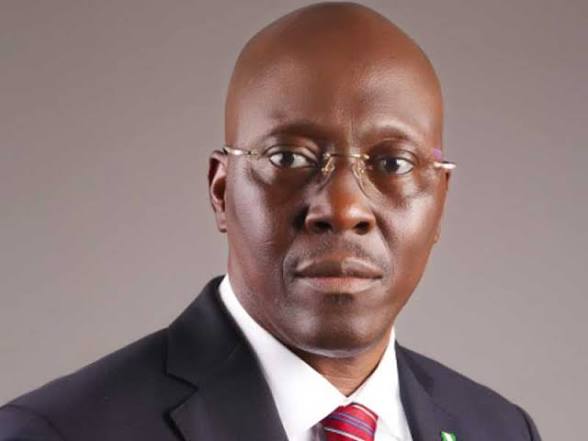
The Oluoke of Okeigbo Kingdom, Ondo State, and President of the Real Estate Developers Association of Nigeria, Oba Akintoye Adeoye, discusses what governance should represent at grassroots levels in this interview with GBENGA OLONINIRAN
What roles should traditional institutions play in governance?
Let me say that, one, I’m still very, very new within the traditional institution setting. Also, let me say this, that within this short period that I find myself in that space, the current government of Asiwaju Bola Ahmed Tinubu is actually trying to integrate the traditional institutions into governance.
For the first time, I learnt that we now have the office of the traditional institution within the Presidency. And also, there is a clear message to the governors on traditional institutional engagement in governance. Your assertion that traditional institutions must be involved in governance is very correct, because unlike in the past, when most of the traditional rulers were illiterates, it’s no longer the same now.
Many of the communities now have professionals as monarchs, who have the capacity, and solid mental capacity to render service to the community and to the government. They can connect with the day-to-day way of running a good administration. The government is now trying to connect the traditional institutions. They can do better and I think they are working to make sure that there are improvements.
What reforms will you advocate to strengthen collaboration between governments and traditional rulers?
The local government system is a process of the people, before the state government and the federal government. When the local governments receive their allocation, and this allocation is published for the people to understand that, for example, my local government—if it’s published that my local government receives N200 million in March—it is easier for the local community to tell the local government that we want to see the proof of where the money is going.
So the disconnect is awareness. We are not sure how much the local government is collecting, nor are we sure of how much they receive from what is allocated to them. The transparency level in government in Nigeria today is not enough, and if we can enjoy more transparency, then people can ask good questions.
So the people in government are more responsible. And people who represent the local government at the state assembly too can ask the state government what exactly they are doing to help the local communities. The same thing with the people in the Senate and the House of Representatives; they represent these local governments and grassroots at the national level. So, where there is transparency and education, we can ask the right questions, and it will trickle down to the local communities.
Another reform that I will advocate is how the local institutions connect with the government. In Nigeria, I think the policies already on the ground are doing so much in that regard. Is there anything to add? Maybe after my first year or second anniversary, and as a part of the system, I’m new to the system but I’m sure that what I met on the ground is robust, and there’s always room for improvement in everything that we do.
Do you think state police would address the insecurity ravaging the country especially with the reality that insecurity is at the grassroots level?
The issue of state police is what I will support anytime. Because when you bring somebody from Zamfara to my community, it will take him so many years to understand my community. But in the case of state police, when you recruit someone from my domain, from my local government, who can speak my dialect, who particularly grew up there, it’s better for that person to police that community than bringing in a stranger. So state police is what we need now to curtail insecurity.
A community person will feel for his community when his brother is killed, or when his family member is kidnapped. Probably he’s going to be one of the people who will contribute money. But if you post me from Ondo State to Sokoto and somebody is kidnapped, so what? So, state policing brings human feelings, and it’s the right thing that the government should embark on and make sure that they conclude and do it.
Land disputes are common in many communities and often contribute to insecurity. As an experienced real estate developer, how can this issue be resolved?
In a broader perspective, the issue of land has remained a contentious issue in Nigeria, and arguably, I will say that the bulk of matters in the court have to do with contests over land. And when you have matters of dispute on land forming the largest percentage of our cases in the courtroom, that means that fundamentally something must be wrong with our land administration system.
For example, the Land Use Act was promulgated in 1978, and since then it has not been reviewed. I believe that it is long overdue for a law that is governing the administration of land. People have been clamouring for change for such a long time, but the legislature has not deemed it fit to review that law. That law has to be reviewed and various interests should be consulted.
Also, the rule of law has to prevail in the land administration system, there will continue to be disputes on land where we lack proper documentation on land. With technology, land can be captured in such a way that we should be able to know who owns a particular parcel of land, through a survey of individual ownership of land. And I think that the government should do a lot in this direction. It is worth the investment. And the government should just make that investment.
At the community level, we have elders who can be referred to when there are disputes over land. We should be able to clarify through history, and we should be able to clarify through people who share boundaries with whoever is claiming the ownership of the land. Practically, we know families and we know the land that they own.
As a legal practitioner, how can customary institutions be better integrated into Nigeria’s formal legal system, particularly in land dispute resolution?
Our legal system has recognised the traditional institutions already. We have the native law, the native court, we have the customary court, and the native institution has never been separated from the main institution. Usually, it is always the last, because they are the grassroots, they are the ones that deal with people. And that is why when we have disputes in the community, the chiefs in council will handle the disputes.
And when the chiefs in council cannot handle such a dispute, it can now go to the customary court within the community before going to the magistrate’s court or the high court. I would say that there is already a connection between a customary institution and the legal system in Nigeria. But it can be promoted, we can create more awareness, and we can also create a kind of orientation for the people to appreciate the traditional judicial system in existence within their community to resolve disputes. Because that is always the best way of resolving disputes.
Nigeria continues to face a significant housing deficit—what innovative solutions can be driven from both government and traditional institutions?
Subsidy is key. The government has to subsidise land acquisition and land titling. Every development is on land. So we have to subsidise because the cost of land is so expensive. Also, the government has to subsidise mortgages. Mortgage should be single digits. When a mortgage is subsidised and we have a single-digit mortgage, people can buy their property and pay for it over many years. Also, bulk purchase of building materials. These are the major, major things that are affecting the price of building materials.
Having trained at the National Institute for Policy and Strategic Studies, how do you see the interface between policy formulation and grassroots realities?
We are not having a shortage of policies. I think what is lacking is what I can describe as institutions. Institutions that are not respecters of persons. So what Nigeria lacks is institutions. We are having strong men, not strong institutions. So when you have strong institutions and not strong men, the institution can shape everybody to behave. Look at today, the U.S., we have institutions challenging the president. Within the traditional institution, there should be strong institutions.
The uniqueness of traditional institutions is that we have strong institutions. We have the Araba, we have the Oluwo, and others that even the king is cautioned in doing some things. The king can be checked. Who will check the president of Nigeria today? The National Assembly, and that institution has to be strong. So every department of that division should be strong enough to do its work.
How can traditional institutions support youth empowerment and job creation?
Youth empowerment generally starts with the youth’s mind. So, we need to help our youth develop a strong mental capacity to understand the importance of being gainfully employed. The culture, to some extent, is that people like begging. They want to beg for money, beg for everything, and the dignity of labour is not being promoted like when we were young.
So, it starts with education to let people understand that there is dignity in labour. They should also understand that Rome was not built in a day. They have to start small and grow. And that is the area where I would like to start—educating the youth on the dignity of labour and ensuring that they embrace skill acquisition.
The future of work is skill acquisition. Artificial intelligence and technology will definitely take away many jobs that we value today. But when you acquire skills in a particular profession or job, I can assure you that it will last longer than many other things people are pursuing today. So, I’m going to start with education. Fortunately for me, there is a technical college in my community. I’m going to maximise the use of that technical college.
As the newly installed monarch of Okeigbo, what legacy do you hope to build for Okeigbo, and how does it tie into Nigeria’s broader development trajectory?
The people of Okeigbo should expect transformation and leadership from me. Progressive leadership—that is what they should expect. Because I have the quality of understanding development and community development, they should expect that this king is going to do more and do it at scale.
How do you intend to balance your role as a traditional ruler with your extensive career in law and real estate?
On November 4, 2025, I received my staff of office as the Oluoke of Okeigbo Kingdom in Ondo State. Before then, I was totally committed to the corporate world where I practised law and was also involved in real estate. At the real estate level, I am still serving as the President of the Real Estate Developers Association of Nigeria. The migration from the corporate world to a traditional institution is not totally strange because I have occupied leadership positions at different levels involving the church, community service, and the corporate world.
The difference today is that I am spending most of my time in my community. Before, it was maybe 20 per cent, but now it is almost 80 per cent traditional assignments and 20 per cent corporate engagements. Everything looks almost the same because it has to be serviced. Now, I am the CEO of Okeigbo Kingdom, but before now, I used to serve as the CEO of a real estate business and law firm.
Being the CEO of Okeigbo Kingdom means that I have to render services to my community in the areas of leadership—education, health, welfare, tourism, and infrastructure. Maybe it is quite different, but there are also synergies. I have to provide that leverage for my community to be connected to what is happening at the state, local government, and federal levels. So, if you look at all the spheres of leadership, you can still find everything within the traditional institution.
All rights reserved. This material, and other digital content on this website, may not be reproduced, published, broadcast, rewritten or redistributed in whole or in part without prior express written permission from Third Lens.
Contact: theeditor@thirdlensng.com